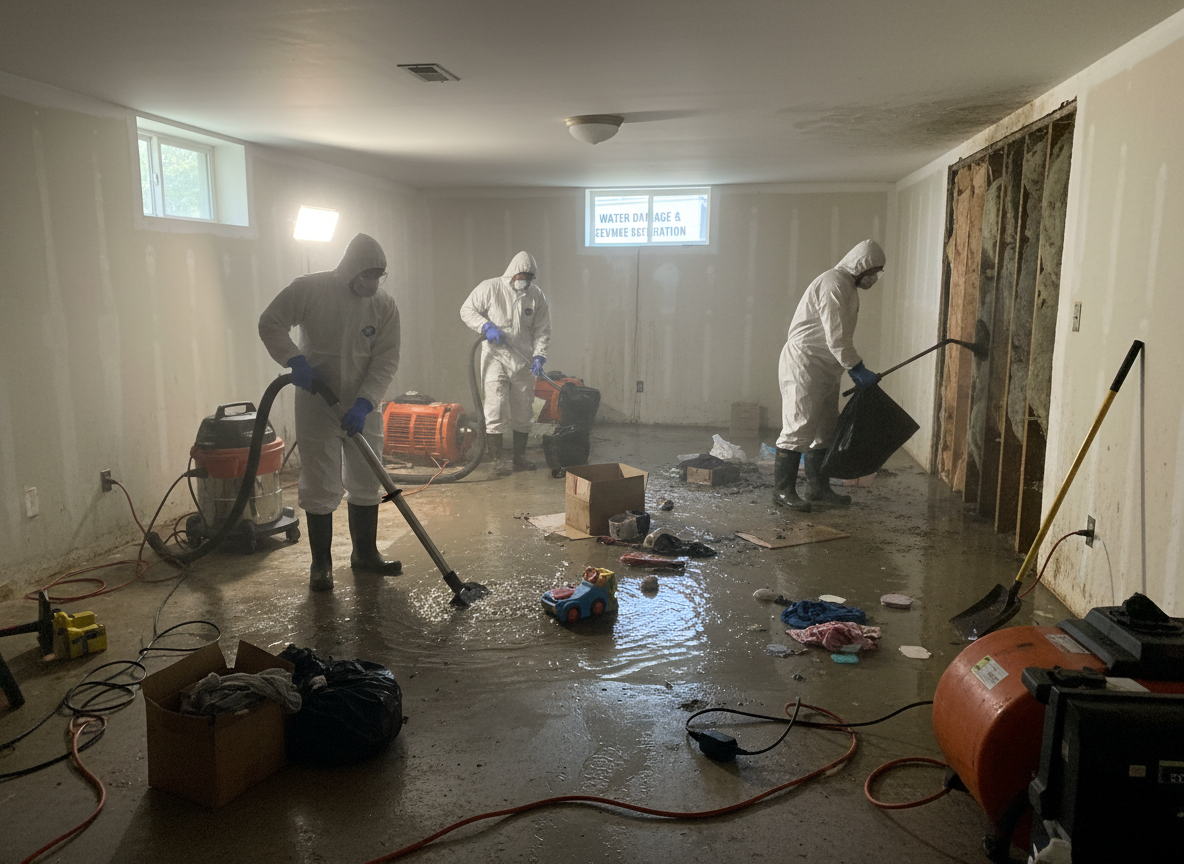
Roswell's semi-arid climate brings sudden summer downpours that overwhelm older clay and cast-iron lines common in Downtown Roswell and Berrendo homes built before 1970. When backups occur, water often carries silt from the surrounding Chaves County terrain, which settles into subfloors and requires extended extraction to prevent hidden mold growth during the dry winters that follow.
North Park and East Grand Plains properties frequently sit on shallow septic or municipal laterals that shift with the region's expansive soils. Technicians must account for these movement patterns during assessment, because standard pump trucks alone leave residue that re-contaminates once temperatures rise again. Proper removal includes breaking up settled solids and treating porous materials that absorb sewage in the hot, low-humidity air.
Walker Air Force Base Museum area homes share similar infrastructure challenges, where irrigation ditches can back up into residential yards after heavy rain. Work here focuses on isolating affected zones quickly to keep odors from migrating through single-story layouts typical of the neighborhood. All extracted waste is hauled to approved Chaves County disposal sites rather than local landfills.
Technician insight
In Roswell, the thing that catches most people out with Residential Sewage Backup Cleanup is how quickly silt from Chaves County irrigation ditches settles into subfloors of pre-1970 homes in Downtown Roswell and North Park. Once the water is gone the dry air hides the residue until summer heat returns and odors spike again.
North Park Backup After Monsoon
Sewage backed up through a floor drain in a 1960s North Park home following a sudden July storm. Silt from local ditches had entered the line and settled under the carpet pad. Crew extracted the water, removed contaminated flooring, treated the subfloor, and dried the space over three days to stop hidden growth before the dry winter set in.
Residential Sewage Backup Cleanup Services We Offer
✓Basement Sewage Extraction
Removes standing sewage from below-grade spaces common in older Roswell homes, preventing structural saturation during monsoon season.
✓Contaminated Carpet Removal
Cuts and disposes of saturated flooring in North Park and Berrendo residences where padding traps bacteria in the dry climate.
✓Sewage Odor Elimination
Neutralizes lingering smells in single-story Downtown Roswell homes by treating porous surfaces that retain odors after extraction.
✓Subfloor Decontamination
Treats and dries plywood or concrete subfloors affected by silt-laden backups typical after Chaves County storms.
✓Biohazard Waste Hauling
Transports contaminated materials to permitted facilities outside Roswell, following local county disposal rules.
Residential Sewage Backup Cleanup Cost in Roswell, NM
| Service | Typical Range | What Affects It |
|---|---|---|
| Initial Assessment and Extraction | $250–$600 | Varies with depth of water and access in older Downtown Roswell homes. |
| Carpet and Pad Removal | $150–$400 | Higher when sewage has wicked into padding in single-story North Park houses. |
| Subfloor Treatment | $300–$750 | Includes silt removal common after summer storms in East Grand Plains. |
| Full Odor and Bio Treatment | $200–$500 | Depends on square footage and porous materials in Berrendo properties. |
Ranges are typical for Roswell, NM and confirmed with an exact written quote before any work starts.
How it works
- 1
Site Assessment
Inspect affected rooms, trace the backup source, and note soil or pipe conditions specific to the neighborhood.
- 2
Water Extraction
Remove standing sewage with truck-mounted equipment suited for Roswell's flat terrain and limited drainage.
- 3
Cleaning and Treatment
Apply EPA-registered disinfectants to all contacted surfaces and remove embedded silt from subfloors.
- 4
Drying and Monitoring
Use air movers and dehumidifiers while tracking moisture levels through the mild winter months.
- 5
Final Clearance
Verify odor and moisture removal before returning the space to normal use.
Pricing
Pricing depends on volume, affected square footage, and whether subfloor removal is required.