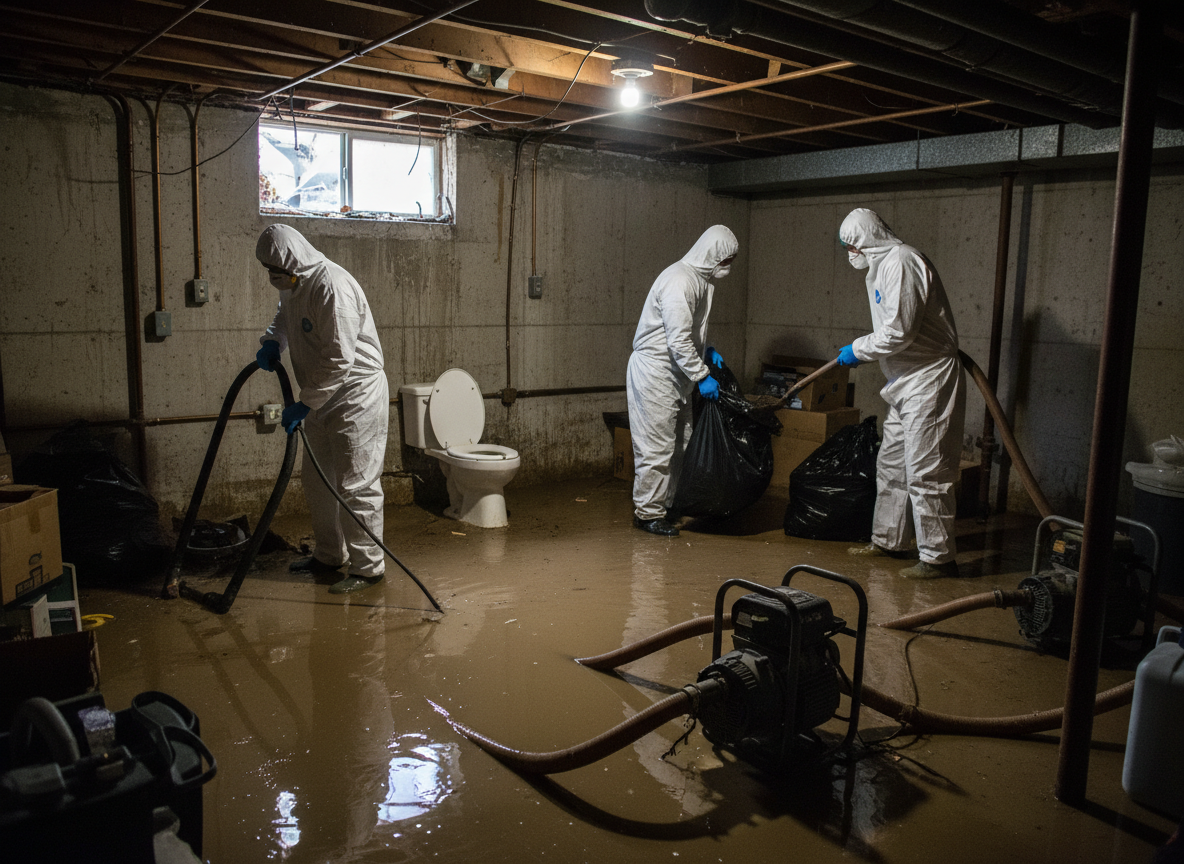
Downtown Roswell Historic District homes and storefronts along Main Street and Kansas Avenue sit on aging sewer lines that frequently back up after heavy summer rains. Roswell Sewage Backup Cleanup Pros responds from our base at 305 S Kansas Ave to extract contaminated water from basements and crawl spaces before it damages original wood floors and adobe walls common in these blocks.
Historic properties near the Chaves County Courthouse and the International UFO Museum often have limited side-yard access and shared alley drains that fill quickly in the semi-arid climate when sudden downpours hit. Our crews stage equipment on Main Street curbs and use compact pumps to pull sewage water extraction through narrow doorways without disturbing protected facades or neighboring businesses.
Mild winters in Chaves County keep ground frost shallow, yet older clay pipes under Berrendo-adjacent streets still crack from root intrusion and shifting soil. We map these lines before each job so extraction and cleanup focus on the exact failure points rather than broad excavation across the tight lots typical of the district.
Around Downtown Roswell Historic District
We regularly work near:
- 📍International UFO Museum and Research Center
- 📍Chaves County Courthouse
- 📍Main Street Historic District buildings
- 📍Roswell Public Library
- 📍Old Downtown Post Office
Sewage Backup Cleanup in Downtown Roswell Historic District — Local Notes
- •Narrow lots and shared alleys between historic buildings on Main Street limit truck access, requiring smaller extraction units and longer hose runs to reach backyard cleanouts.
- •Many Downtown Roswell homes retain original clay or cast-iron sewer lines installed before 1950 that crack under monsoon flows, sending backups into finished basements rather than yards.
- •Flat terrain around the courthouse square and low curb heights allow street runoff to enter foundation vents during heavy rains, pushing sewage into lower levels of adobe and brick structures.
- •Proximity to the Pecos River and older municipal lines means groundwater infiltration rises quickly after storms, lengthening drying times for wood subfloors in these century-old buildings.